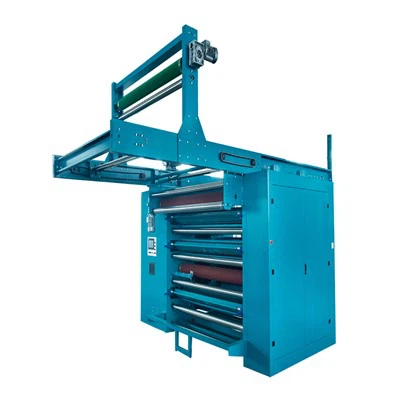
If you’ve ever walked the floor of a textile mill on a hot, loud production day, you know that dyeing machines are the beating heart of the operation. They turn raw fabric into finished, colored goods that go on to make everything from t-shirts to upholstery, and I’ve spent the better part of a decade helping mills pick, maintain, and run these machines—so I’ve seen every kind of safety misstep imaginable. A few years back, I visited a small mill in South Carolina where a worker tried to clear a jam in a jet dyeing machine while it was still cycling, and they got pulled into the fabric feed mechanism. It was a close call that left them with broken bones and the mill with six figures in downtime, not to mention a whole lot of unnecessary stress. That’s why, as someone who supplies dyeing machines to mills large and small, I can’t stress enough that safety isn’t just an afterthought—it’s the foundation of every good dye house operation. When we sell a machine, we don’t just hand over the hardware; we walk clients through every precaution that keeps their team safe and their production running smoothly. Dyeing Machine
First off, let’s start with the basics: lockout/tagout (LOTO) procedures. This is non-negotiable, but you’d be shocked how many small mills cut corners on this, especially when they’re rushing to meet a deadline. LOTO means that whenever a worker needs to service, clean, or repair a dyeing machine—whether that’s unclogging a dye line, replacing a worn seal, or fixing a faulty sensor—they need to shut off all power sources (electrical, hydraulic, pneumatic), secure each one with a personal lock and unique tag, and confirm with a second check that the machine is completely inert before starting work. I’ve had a customer call me at 2 a.m. once because their machine suddenly cycled while a tech was inside the dye vat, and that was all because the previous shift hadn’t locked out the main power when they did a quick adjustment. It only takes a split second for a machine to activate, and LOTO is the single most effective way to prevent that. Our company includes a full LOTO training module with every new machine we sell, because we’ve seen firsthand how easy it is to skip that step when you’re under pressure.
Next, personal protective equipment (PPE) that’s actually fit for the job. Dyeing isn’t like an office job—you’re dealing with hot water, strong chemicals, rotating parts, and airborne dye particles, and generic work gloves or goggles just won’t cut it. For anyone working around dyeing machines, we specify that they need chemical-resistant gloves (nitrile or butyl rubber, not latex), face shields that cover the entire face (not just safety glasses, which can crack if a dye jar shatters), heat-resistant aprons and sleeves, and steel-toe boots with non-slip soles. I once watched a worker at a Georgia mill get splashed with 180-degree reactive dye because they were wearing regular cotton gloves; the dye ate right through the fabric and burned their arm badly. Also, many dye formulations have volatile organic compounds (VOCs) that can irritate lungs or cause long-term health issues, so respiratory protection—whether that’s N95 masks for light exposure or powered air-purifying respirators (PAPRs) for heavy dye work—is non-negotiable. We always work with our clients to assess their specific dye formulas and recommend the right PPE, because one size never fits all here.
Then there’s the matter of machine guarding, which is something we engineer into every dyeing machine we build, but mills still need to maintain it regularly. All moving parts on a dyeing machine—feed rollers, pump impellers, vat agitators, and door mechanisms—need to be covered with fixed or interlocked guards. Fixed guards are physical barriers that can’t be removed without tools, so they’re ideal for parts that are always moving. Interlocked guards are even more important: if someone opens the access panel to the vat or the feed compartment, the machine’s control system should automatically cut power to all moving parts, so it can’t cycle while the guard is open. A common mistake we see is mills removing interlock guards to make troubleshooting faster, but that’s a huge risk. Last year, a mill in Bangladesh had a fatal accident when a worker reached into an open vat to adjust fabric tension, bypassing the interlock switch, and the pump turned on without warning. We design our machines with redundant interlock systems to catch even that kind of mistake, but it’s only effective if the guards are never disabled.
Proper chemical handling and storage is another critical safety area that’s tied directly to dyeing machine operation. Dyes, leveling agents, fixing agents, and cleaning chemicals are all corrosive, flammable, or toxic in high concentrations, and how you store and dispense them affects everyone working around the machine. For example, if a concentrated acid dye is stored next to a base, a spill can create a toxic gas that fills the dye house in minutes. We recommend that clients store all chemicals in labeled, sealed cabinets separated by compatible hazard classes, and that they use closed transfer systems when adding chemicals to the dye machine—no open pouring into hoppers. Open pouring is a top cause of chemical splashes and spills, and it’s completely avoidable with the right equipment. Also, every dyeing machine should have a dedicated spill kit within arm’s reach, neutralizing agents for corrosive chemicals, and a way to contain small spills before they spread to floors (which can cause slips and falls). I always tell mills that a $50 spill kit is way cheaper than a $50,000 worker’s comp claim for a chemical burn.
Vat entry safety is a whole separate category, because getting inside a dye vat is one of the most dangerous tasks in a dye house. Dye vats hold hot water at temperatures ranging from 120 to 220 degrees Fahrenheit, plus they’re filled with chemicals that can burn skin or irritate lungs, and there’s a risk of falls or entrapment. No one should ever enter a dye vat alone—we mandate a three-person team for all vat entry: one worker inside the vat, one standby worker outside, and a safety monitor who’s trained to call for emergency services if something goes wrong. The standby worker should have a retrieval line and respiratory protection ready, and they should never leave the area while someone is inside. Also, before entry, the vat needs to be flushed multiple times with clean water, tested for oxygen levels (low oxygen can cause dizziness or loss of consciousness), and all power to the vat’s pump and agitator must be locked out. A few years back, a mill in North Carolina had a worker pass out in a vat because of high levels of dye fumes, and because their coworker wasn’t trained to retrieve them safely, it took emergency responders 15 minutes to pull them out—they survived, but it was a close call. Our machines have built-in ventilation systems that reduce fume buildup, but proper entry procedures are non-negotiable.
Maintenance and routine checks are also part of safety, not just a way to keep production running. Dyeing machines have many small parts that wear out over time: worn door seals can cause hot steam to leak out, faulty temperature sensors can lead to overheating that damages the machine or creates a fire risk, and loose wiring can cause electrical shocks. We provide every client with a detailed maintenance schedule that includes daily pre-use checks, weekly inspections, and monthly service visits, and we offer optional maintenance programs where our technicians come in regularly to service the machine. The pre-use checks are the most important: before each shift, operators should test the interlock guards, confirm that the LOTO system works, check for leaks in steam lines or chemical hoses, and verify that emergency stop buttons are functional. Emergency stop buttons are often overlooked, but every dyeing machine should have large, clearly marked stop buttons at every access point, and they should be tested weekly to make sure they cut power immediately. I once had a customer tell me they skipped testing the emergency stop button for a month, and when a fabric jam caused a fire, the button didn’t work because it was corroded from a chemical leak—they lost a half-finished machine and a roll of fabric, plus hours of production time.
Training is the thread that ties all these precautions together, and it’s something we prioritize as a supplier, not just a one-time training session when the machine is delivered. A lot of smaller mills rely on experienced workers who’ve been around for years, but experience doesn’t equal knowledge of new safety protocols or new machine features. We offer ongoing training for all our clients, both in-person and online, that covers everything from LOTO procedures to how to use the machine’s safety features. We also work with mills to create custom safety manuals for their specific operation, since every dye house runs a little differently. Last year, we trained a group of new operators at a mill in Vietnam, and halfway through the training, they mentioned that they’d never had formal training on interlock guards—they’d just learned to run the machines by watching coworkers. By the end of the session, they were testing their own interlock systems and asking questions about vat entry procedures, and that’s exactly what we want: workers who feel confident and safe operating their machines.
Another thing we talk to clients about is machine placement and housekeeping around the dyeing machine. Dyeing machines need to have enough clearance on all sides for workers to move safely, access guards, and respond to emergencies. If a machine is crammed against a wall, there’s no room to get to the emergency stop button, or to pull someone out if they need help. Housekeeping is also a big part of safety: spilled dye, water, or chemicals on the floor create slip and fall hazards, and fabric scraps left around the machine can catch fire if they come into contact with a hot steam line. We recommend that mills have a “no clutter” policy around all dyeing machines, with a schedule for mopping up spills and removing debris immediately. I’ve seen a mill in Texas have a worker break their hip when they slipped on a puddle of hot dye near a jet dyeing machine, and that accident could’ve been completely avoided if the spill had been cleaned up right away.
Finally, emergency preparedness is something that every dye house needs, no matter how many precautions they take. Even with the best procedures, accidents can happen, so every site should have a clear emergency plan that’s posted near every dyeing machine. The plan should include contact information for local emergency services, details on what to do in case of a chemical spill, a fire, or a worker trapped in a vat, and a designated assembly point for all workers. We provide clients with emergency checklists that are specific to our machines, so they know exactly what steps to take in an emergency. For example, if a chemical spill occurs near our dyeing machines, the checklist tells them to activate the machine’s secondary containment system, put on the right PPE, and call for help—no guesswork.

At the end of the day, safety isn’t just a rule—it’s what lets workers go home to their families at night, and what keeps a mill running smoothly for years. As a dyeing machine supplier, we don’t just sell equipment; we partner with mills to make sure their operations are safe, efficient, and profitable. If you’re looking for a reliable partner for your dyeing machine needs, we can walk you through every safety feature, provide training for your team, and work with you to create a safety plan that fits your specific operation. Reach out to our team to start a conversation about your needs, and let’s build a safer, more productive dye house together.
Dehydration References
- Occupational Safety and Health Administration. (2022). Guidelines for Dyeing Machine Safety in Textile Manufacturing. U.S. Department of Labor.
- Textile Institute. (2021). Safety Protocols for Industrial Dyeing Processes. Textile Institute Press.
- National Fire Protection Association. (2020). NFPA 70E: Standard for Electrical Safety in the Workplace. National Fire Protection Association.
- International Labour Organization. (2019). Safety and Health in the Textile, Clothing and Leather Sector. ILO Publishing.
Jiangsu Feng Te Technology Co., Ltd.
We’re well-known as one of the leading dyeing machine manufacturers in China. With a professional production team, we are able to meet the needs of the majority of our customers. Please rest assured to buy discount dyeing machine for sale here from our factory.
Address: No. 4 Zhanghong Road, Siying Industrial Park, Lianyungang City, Jiangsu Province, China
E-mail: frentejenny@foxmail.com
WebSite: https://www.jsfrente.net/
