If you’ve stood on a sun-scorched coast where aquifers are drying up, or visited a remote island that runs out of potable water twice a week, you’ve probably heard of desalination. As a desalination equipment supplier, I get asked one question more than any other: “My water source is [fill in the blank]—can your system handle it?” The short answer is almost always yes, but the long answer tells the story of how we design, adapt, and tweak every part of our equipment to work with everything from briny ocean water to runoff from coastal farms, and even treated wastewater. Desalination isn’t a one-size-fits-all tech, and getting it right means meeting the source where it is, not the other way around. Desalination Equipment

Let’s start with the most common source: seawater. That’s what most people picture when they think desalination, and it’s what our systems are built for first. Seawater has an average salinity of 35,000 parts per million (ppm)—that’s 35 grams of salt in every liter, more than 100 times saltier than tap water. To pull that out, the standard we use across our lineup is reverse osmosis (RO), but we don’t just plug any RO membrane into a box and call it done. Seawater has more than just salt in it, too: it has silt, algae, bacteria, dissolved minerals like calcium and magnesium, and even tiny pieces of plastic, all of which can clog or damage the delicate RO membranes (which are only 0.0001 microns thick—way smaller than a red blood cell).
That’s why our seawater systems start with a pre-treatment stage that’s tailored to coastal intake conditions. For open-ocean intakes, where water is relatively clear and consistent, we use a multi-media filter: a tank filled with layers of sand, anthracite coal, and garnet that traps larger particles like silt and algae. But if a customer is pulling water from a shallow bay where runoff from nearby farms carries fertilizer and sediment, we add an extra step: a security filter with a 5-micron cartridge that catches even fine clay particles. We also inject a small dose of anti-scalant to prevent dissolved minerals like calcium carbonate from forming scale on the membranes, and a low dose of biocide to kill bacteria that would otherwise grow and form biofilm on the membrane surface. I once worked with a plant in the Mediterranean that switched from a cheap, one-size-fits-all system to our custom seawater setup because their old system would shut down every other week due to biofilm clogging. After we adjusted the pre-treatment to match their bay’s seasonal algae blooms, their downtime dropped by 80%—that’s the kind of result that makes the custom design worth it.
Next up is brackish water. Brackish water is what you find in estuaries, in shallow aquifers under coastal land, or in groundwater that’s a mix of rain and salt. Its salinity is way lower than seawater—usually between 1,000 and 10,000 ppm—but that doesn’t mean it’s easier to treat. In fact, brackish water has its own set of unique challenges, depending on where it’s pulled from. For example, groundwater aquifers often have higher levels of dissolved solids like iron and manganese, which can react with air to form rusty sediment that clogs filters, or even damage RO membranes. That’s why our brackish water systems use an aeration step first—we bubble air through the water to oxidize those metals, turning them into solid particles that can be filtered out before RO treatment.
I remember a customer in the Central Valley of California a few years back who was dealing with brackish groundwater that had a salinity of 6,000 ppm. Their old system was losing 25% of its product water to waste because it was set up for higher salinity, and it kept fouling because of high levels of boron, a mineral that’s toxic to plants and humans in large doses. We adjusted their brackish system to use a specialized RO membrane with higher boron rejection, and tweaked the operating pressure to match their source’s unique salinity. Within six months, they were producing 15% more potable water, and their boron levels were well below the World Health Organization (WHO) limit of 0.5 ppm. The key here is that brackish water sources vary wildly—what works for an aquifer in Texas won’t work for one in India, so we don’t just sell a pre-built brackish system; we test the source water first to adjust every part of the process.
Now, moving beyond natural sources: what about non-traditional sources, like agricultural runoff, municipal wastewater effluent, or even stormwater? These are becoming more common as communities look for circular water solutions, and our equipment has to adapt even more here because these sources can be highly variable. Take agricultural runoff, for example. It’s not just water—it’s a mix of leftover fertilizer (nitrates and phosphates), pesticides, animal waste, and sediment. Treating that to a level where it’s safe to drink or use for irrigation means going beyond standard RO. For agricultural runoff, we add a step called ultrafiltration (UF) before RO. UF membranes are slightly larger than RO membranes, but they’re still small enough to trap bacteria, viruses, and large organic molecules like pesticides. That extra layer ensures that even trace amounts of chemicals that would otherwise pass through RO are removed. We also add an activated carbon filter after UF to catch any remaining pesticides or volatile organic compounds (VOCs). I worked with a group of tomato farmers in Spain a couple years ago who were struggling with salt buildup in their fields because their irrigation water had become too saline due to drought. We installed a small-scale desal system that treated their field runoff, and they were able to reuse 90% of their water, cutting their water costs by 40% and reducing their environmental impact.
Then there’s wastewater, or as it’s often called in the industry, “water reclamation.” Treating municipal wastewater to drinking water standards (sometimes called potable reuse) is one of the fastest-growing uses for desalination, especially in places like Singapore and Namibia where water is extremely scarce. Wastewater has all kinds of stuff in it: organic matter, pharmaceuticals, personal care products, microplastics, and even trace amounts of industrial chemicals. Our systems for this source have to be the most robust, because the contaminants are far more diverse than in natural water sources. For potable reuse, we use a three-stage process: first, microfiltration or UF to remove all particles and microorganisms, then RO to remove dissolved salts and most organic contaminants, and finally, advanced oxidation using ultraviolet (UV) light and hydrogen peroxide to break down any trace contaminants that might have slipped through. We also test every component of these systems for compatibility with the chemicals used in advanced oxidation, because some materials can break down when exposed to hydrogen peroxide over time. A utility in Tucson, Arizona, uses our wastewater desal system to supply 10% of the city’s drinking water, and they’ve had 100% compliance with EPA standards for five years running—proof that this tech works for even the most challenging non-traditional sources.
But it’s not just about the source’s composition—we also have to account for variable flow rates and conditions. Some sources, like a small island’s rainwater catchment, might only have water during wet seasons, so our systems have to handle fluctuating inflow. We design our equipment with variable frequency drives (VFDs) that adjust the pump speed based on how much water is coming in, so we don’t waste energy when flow is low, and we don’t damage membranes when flow is high. For remote locations that don’t have access to the grid, we also offer solar-powered desal systems that can adjust to variable sunlight levels, so they can run even on cloudy days. We installed a solar-powered system on a remote atoll in the Pacific last year that had never had reliable potable water before. The system automatically adjusts its pressure and flow based on solar output, so it never overdraws the battery or stops working mid-day, even when there’s less sun. The community now has enough water to last through droughts, and they’ve stopped relying on expensive, carbon-heavy water shipments.
Another big factor in adapting to different water sources is membrane selection. RO membranes aren’t one-size-fits-all—there are membranes made for high-salinity seawater, ones optimized for brackish water that have higher water flux (meaning they produce more water per unit of energy), and even specialty membranes for removing specific contaminants like boron or nitrates. When we test a customer’s water source, we send a sample to our in-house lab to measure salinity, pH, contaminant levels, and even the presence of specific minerals that could cause scaling. Then we select the right membrane type, size, and number to match their needs. For example, a customer treating water with high levels of silica (which causes scaling) won’t get a standard membrane—we’ll recommend one that’s designed to operate at lower pH, which reduces silica scaling, or adjust the pre-treatment to add a silica precipitant before RO.
Energy use is another critical point when adapting to different sources, especially for customers in remote areas or places with high electricity costs. Treating highly saline water like seawater requires more energy, so our seawater systems use energy recovery devices—devices that capture the pressure from the concentrated brine stream and use it to power the feed pump, cutting energy use by up to 50%. For lower-salinity brackish water, we can use lower-pressure RO membranes that use less energy, since there’s less salt to pull out. For solar-powered systems, we prioritize the lowest-energy components possible, so we don’t need oversized solar panels or batteries.
I’ve learned over the years that the biggest misconception about desalination is that it’s a fixed tech that only works for seawater. But in reality, desalination equipment is a custom-tailored solution, built to meet the unique challenges of every water source. Whether you’re treating seawater off the coast of Africa, brackish groundwater in the American Plains, or agricultural runoff in Southeast Asia, the right desal system can turn that water into something usable, safe, and affordable. We’ve seen firsthand how this tech can change communities—from providing water to a drought-stricken village to helping a farm stay in business during a multi-year dry spell. Every water source is different, and our job is to meet it where it is, so no one has to go without potable water.
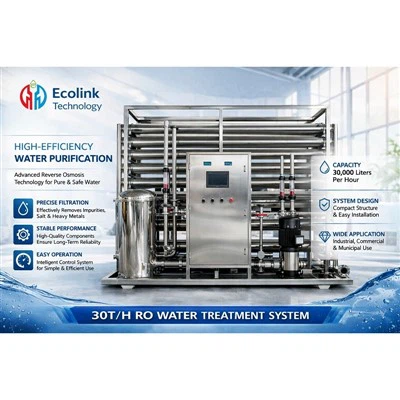
If you have a water source you’re looking to treat, whether it’s seawater, brackish water, runoff, or wastewater, we can help. We’ll test your source, walk you through the options, and design a system that fits your needs, your budget, and your location. Don’t let water scarcity hold you back—reach out to us to start a discussion about your project.
Polyaluminium Chloride References
- "Reverse Osmosis Desalination: Principles and Applications." World Health Organization, 2021.
- "Brackish Water Desalination: Challenges and Solutions." International Desalination and Water Reuse Association, 2022.
- "Potable Reuse Technology and Standards." U.S. Environmental Protection Agency, 2023.
- "Solar-Powered Desalination for Remote Communities." United Nations Water, 2022.
- "Membrane Selection for Desalination: A Guide to Contaminant Removal." Desalination Industry Magazine, 2021.
Shandong Ecolink Technology Co., Ltd.
Shandong Ecolink Technology Co., Ltd. is one of the most reliable desalination equipment manufacturers and suppliers in China. We warmly welcome you to wholesale bulk high quality desalination equipment from our factory. If you have any enquiry about cooperation, please feel free to email us.
Address: No. 8, Xiaying Chemical Industry Park, Aobu Road, Xiaying Town, Changyi City, Weifang City, Shandong Province,China
E-mail: sale02@ecolink-environment.com
WebSite: https://www.ecolink-environment.com/
