In the dynamic landscape of modern infrastructure, guyed wire towers have long been a cornerstone for various industries, including telecommunications, broadcasting, and electrical power transmission. As a leading provider in the field of guyed wire tower solutions, I’ve witnessed firsthand the evolution of these structures over the years. Today, I’m excited to share my insights on the future trends in guyed wire tower design that are shaping the industry. Guyed Wire Tower

1. Advanced Materials and Manufacturing Techniques
The choice of materials is fundamental to the performance and longevity of guyed wire towers. In the future, we anticipate a significant shift towards using advanced materials that offer superior strength – to – weight ratios and enhanced corrosion resistance.
Carbon fiber composites are at the forefront of this trend. These materials are incredibly lightweight, yet their strength can rival that of steel. By incorporating carbon fiber into the tower’s design, we can reduce the overall weight of the structure, which has several benefits. Firstly, it simplifies transportation and installation, as lighter components are easier to handle and maneuver. Secondly, less weight means less stress on the foundation, potentially reducing foundation costs. Additionally, carbon fiber has excellent fatigue resistance, which is crucial for guyed wire towers that are subjected to continuous wind and vibration loads.
Another promising material is high – strength steel. With advancements in steel – making technology, we can now produce steels with much higher yield and tensile strengths. High – strength steel allows for thinner and lighter structural members without sacrificing safety or performance. This not only reduces material costs but also minimizes the environmental impact during the manufacturing process.
In terms of manufacturing techniques, additive manufacturing, or 3D printing, is set to revolutionize the way guyed wire towers are produced. 3D printing enables the creation of complex geometries that were previously impossible or prohibitively expensive to manufacture using traditional methods. This allows for more customized tower designs that can be optimized for specific site conditions and performance requirements. We envision that in the future, we’ll be able to 3D print entire sections of guyed wire towers on – site, reducing lead times and transportation costs significantly.
2. Enhanced Structural Analysis and Design
As technology advances, so does our ability to conduct more accurate and detailed structural analysis of guyed wire towers. Finite element analysis (FEA) has already been a staple in the tower design process, but future trends will see even more sophisticated analysis techniques.
Multi – physics analysis will become increasingly common. This involves analyzing not only the structural mechanics of the tower but also incorporating other physical phenomena such as wind engineering, electrical conductivity (for towers used in power transmission), and thermal effects. By considering these multiple factors simultaneously, we can design guyed wire towers that are more resilient and better – adapted to real – world conditions.
Artificial intelligence (AI) and machine learning are also set to play a crucial role in tower design. These technologies can analyze vast amounts of data from past tower projects, including performance data, environmental conditions, and maintenance records. By identifying patterns and correlations in this data, AI algorithms can help engineers optimize tower designs, predict potential failures, and develop more efficient maintenance strategies. For example, machine learning models can be trained to predict the remaining service life of a tower based on its current condition and the environmental factors it is exposed to.
3. Sustainability and Environmental Considerations
Sustainability is no longer just a buzzword; it’s a critical aspect of modern infrastructure design. In the future, guyed wire tower design will be heavily influenced by environmental considerations.
One of the key trends will be the integration of renewable energy sources into tower designs. For example, guyed wire towers can be equipped with small – scale wind turbines or solar panels to generate electricity for on – site use, such as powering communication equipment or lighting. This not only reduces the tower’s reliance on the grid but also helps to lower its carbon footprint.
Another aspect of sustainability is end – of – life management. Future tower designs will need to be more easily disassembled and recycled. This requires careful consideration of the materials used and the design of the tower’s connections. By designing towers with recyclability in mind, we can minimize waste and contribute to a more circular economy.
In addition, environmental impact assessments will become even more comprehensive. Tower designs will need to take into account factors such as wildlife habitats, noise pollution, and visual impact. For example, we may see the development of tower designs that are less intrusive to bird migration patterns or that blend in better with the surrounding landscape.
4. Smart Towers and IoT Integration
The Internet of Things (IoT) is transforming industries worldwide, and the guyed wire tower sector is no exception. In the future, we’ll see the emergence of smart guyed wire towers that are equipped with a network of sensors and monitoring devices.
These sensors can collect a wide range of data, including structural health data (such as strain, vibration, and displacement), environmental data (such as wind speed, temperature, and humidity), and equipment performance data (for example, the status of communication equipment on the tower). This data can be transmitted in real – time to a central monitoring system, allowing operators to continuously monitor the tower’s condition and performance.
By analyzing the sensor data, operators can detect early signs of potential problems, such as structural damage or equipment malfunctions. This enables proactive maintenance, which can prevent costly failures and downtime. For example, if a sensor detects an abnormal increase in vibration levels, the operator can schedule an inspection and take corrective action before the problem escalates.
Furthermore, smart towers can be integrated with other systems in the broader infrastructure network. For example, they can communicate with power grids to optimize energy consumption or with traffic management systems to provide real – time information about traffic conditions in the area.
5. Adaptability and Modularity
In an ever – changing world, guyed wire towers need to be more adaptable and modular. Future designs will be based on a modular concept, where different components of the tower can be easily added, removed, or replaced.
This modular approach offers several advantages. Firstly, it allows for easy upgrades and expansion of the tower’s capabilities. For example, if a telecommunications provider needs to add new antennae to a tower, they can simply install the appropriate modular sections without having to redesign or rebuild the entire tower. Secondly, modular towers are more flexible in terms of installation and transportation. Components can be manufactured in a factory and then transported to the site for assembly, reducing on – site construction time and costs.
In addition, adaptable tower designs can better accommodate changes in site conditions or future requirements. For example, if the wind patterns at a particular site change over time, the tower can be modified to adjust its structural configuration and improve its performance in the new conditions.
Conclusion
The future of guyed wire tower design is extremely promising, with a multitude of exciting trends on the horizon. From advanced materials and enhanced analysis techniques to sustainability, IoT integration, and modularity, these trends will shape the way we design, build, and manage guyed wire towers in the coming years.
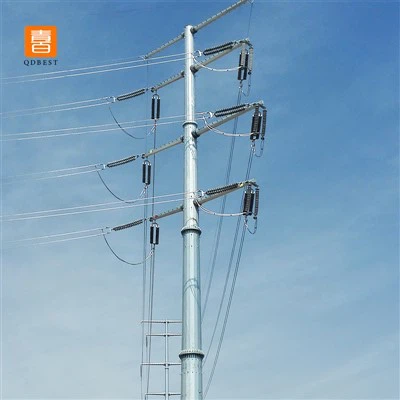
As a dedicated guyed wire tower supplier, we are committed to staying at the forefront of these trends and delivering innovative solutions to our customers. We understand that each project is unique, and we work closely with our clients to design and manufacture towers that meet their specific needs and requirements.
Tubular Tower Whether you’re in the telecommunications, broadcasting, or power transmission industry, we have the expertise and experience to provide you with high – quality guyed wire towers that are built to last. If you’re interested in learning more about our products and how we can help with your upcoming project, we encourage you to reach out and engage in a procurement discussion. Our team of experts is ready to answer your questions and provide you with detailed information and guidance.
References
- ASCE 10 – 15, “Specification for the Design of Steel Latticed Transmission Structures,” American Society of Civil Engineers.
- ISO 13822, “Sustainable construction work – Assessment of environmental performance of construction works – General principles and framework,” International Organization for Standardization.
- Liu, Y., & Zhang, L. (2019). “Fatigue analysis of carbon fiber composites for infrastructure applications.” Composite Structures, 220, 111005.
- Wang, J., & Li, Q. (2020). “Application of artificial intelligence in structural engineering: A review.” Engineering Structures, 209, 110240.
Qingdao BEST Steel Structure Co., Ltd.
Qingdao BEST Steel Structure Co., Ltd. is one of the most professional guyed wire tower manufacturers and suppliers in China. We warmly welcome you to buy customized guyed wire tower made in China here from our factory. If you have any enquiry about OEM service, please feel free to email us.
Address: Jiaobei Industrial Park, Qingdao, China
E-mail: sales@qdbsstower.com
WebSite: https://www.qdbsstower.com/
