If you’ve ever walked through a warehouse, you’ve definitely seen stretch wrappers in action—they’re the unsung heroes of load stability, right? But here’s the thing: most people don’t stop to think about the control system that makes that machine tick. I’ve been supplying stretch wrapper control systems for over a decade now, and I’ve seen firsthand how even small glitches in those controls can turn a smooth packing line into a hot mess. Over the years, I’ve heard the same frustrated questions from operators, line managers, and maintenance techs again and again. Let’s break down the most common problems we run into, straight from someone who lives and breathes these systems every day. Stretch Wrapper Control System

First up, sensor drift. This one’s sneaky—It doesn’t just crash a line out of nowhere; it creeps up on you. A lot of stretch wrapper control systems rely on optical, load, or proximity sensors to measure things like load height, film tension, and wrap count. Over time, dust, humidity, and that constant vibration from the machine itself throw those sensors off. I had a client last month who thought their wrapper was breaking film randomly, turns out their height sensor had drifted just enough to not detect when the load was 2 inches shorter than normal. They ended up running too much film on half their loads, wasting $500 in materials in a week before they caught it. What makes this extra frustrating? It’s not a hardware failure most of the time. You can recalibrate it, but if the control system doesn’t have a user-friendly way to do that—like, say, a one-button calibrate instead of digging through 10 menus—operators just skip it. They’ve got a line to run, so they leave it and deal with the mess later. That’s a classic case of “easy problem to fix, hard to notice until it’s costly.”
Next, inconsistent film tension. This is the big one that tanks load stability, and honestly, it’s usually tied to the control system’s programming, not the film itself. I’ve seen wrappers that work perfect for a day, then start slacking film on the bottom of the load and over-tightening it on the top. Why? A lot of cheaper control systems use a static tension setting that doesn’t adjust for load size. If you’re wrapping a 48-inch pallet one minute and a 24-inch the next, the film path changes, so the old tension setting doesn’t apply. Worse, some systems store tension settings as fixed presets, so if you forget to toggle between “small load” and “large load,” you’re golden. Another angle: gear slippage that the control system doesn’t monitor. If the tension motor’s gears slip, the sensor that’s supposed to track film pull doesn’t send a signal to the control, so it keeps pulling film like nothing’s wrong. We had a manufacturing client last year whose loads kept collapsing in transit—turns out their control system didn’t alert them to gear slippage, so tension was all over the place. They fixed the gears and updated the control to send a warning, and their breakage rate dropped 70% right away.
Then there’s user interface (UI) that’s basically garbage. I know, I know—this sounds petty, but when your line is running 24/7, a bad UI is a day ruiner. A lot of older stretch wrapper control systems use tiny, text-heavy screens with 10 different buttons that do 20 things, and half the labels are worn off from fingers smacking them. Operators don’t have time to read a manual every time they need to change a wrap pattern, so they stick with what they know—even if it’s not the right setting for a new load size. I once visited a third-party logistics (3PL) company where an operator had been manually adjusting film tension with a screwdriver every shift because the control system’s menu was so confusing. They had the option to program custom wrap cycles, but no one wanted to spend 10 minutes learning how to do it. The result? More film waste, more load damage, more overtime for that operator who was always adjusting that screwdriver. Modern controls fix this with touchscreens, visual prompts, and one-touch presets, but a lot of companies are running on 10-year-old systems that never got updated.
Hardware incompatibility and random connectivity issues. Wait, I’m not just talking about Wi-Fi—though that’s a problem too. A lot of stretch wrapper control systems are retrofitted with extra features: maybe a barcode scanner, a conveyor integration, or a vision system for damaged loads. But if the control system’s firmware doesn’t play nice with those add-ons, you get weird glitches. Like, the scanner works fine, but the control won’t sync it to pause the line when damaged loads come through. Or, for the Wi-Fi side: if your control is using an old Bluetooth module that doesn’t pair with your new warehouse management system (WMS), you can’t track wrap cycles or generate reports. I had a client last quarter who was trying to integrate their stretch wrapper data into their WMS, but the control’s communication module was obsolete. They had to either replace the module or upgrade the whole control system, and that was a $3,000 expense they didn’t budget for. The worst part? These incompatibilities rarely pop up during installation—they show up 6 months later when you’re trying to scale or upgrade your warehouse setup.
Power-related weirdness, too. I don’t mean full-blown power outages, I’m talking about voltage spikes, brownouts, and dirty power that screws with the control system. Stretch wrappers have heavy motors, so when they kick on, they draw a ton of power, and if your building’s wiring isn’t up to par, that causes little power surges that can fry sensors or glitch the control’s memory. I’ve had clients where the control would randomly reset mid-wrap, leaving a half-wrapped pallet that had to be re-done. Sometimes it’s as simple as adding a surge protector, but a lot of older control systems don’t have built-in surge protection, so you’re stuck adding that extra piece of gear. And if the control’s internal battery is dying? That’s another headache. Most people forget to replace the backup battery, which is supposed to keep program settings saved when the main power goes out. So if there’s a blip in power, the control forgets all your custom wrap cycles, tension settings, and even load height calibrations. One warehouse manager told me he’d had to re-calibrate his control 3 times a week because the battery was dead. That’s not a minor issue—when your control can’t remember basic settings, you’re wasting time and materials every single shift.
Wait, let’s not forget about lack of predictive monitoring. A lot of stretch wrapper control systems only tell you something’s wrong after it’s already broken. They send an “error code” when the film snaps, or when the motor dies, but they don’t track trends. Like, if the tension sensor is drifting a little more each week, or the motor is drawing more current than usual, the control won’t flag that before it causes a line shutdown. We had a food and beverage client whose wrapper motor burned out on a Friday night, right before a huge shipment deadline. They lost $15,000 in rush shipping fees because the control didn’t alert them that the motor was failing a month earlier. Modern control systems we supply track those little metrics, send alerts to your phone or maintenance team, so you can fix small issues before they become big, expensive problems. That’s a game-changer, but a lot of companies are running on controls that don’t have that capability.
Now, I know what you’re thinking: “This sounds like all stretch wrapper control systems are garbage.” No, not at all. The good ones solve most of these problems, but the key is matching the control system to your specific operation. A small 3PL that wraps pallets of apparel doesn’t need the same control as a manufacturing plant that wraps heavy equipment parts. A lot of companies buy the cheapest control system they can find, and then they’re stuck dealing with these issues for years. That’s why when we work with a client, we don’t just sell them a control system—we ask about their line size, the types of loads they wrap, how many shifts they run, and what their pain points are. If they’re struggling with sensor drift, we’ll set up a system with environmental-sealed sensors and easy calibration. If they’re dealing with bad UI, we’ll go with a touchscreen with custom presets so operators don’t have to mess with complicated menus.
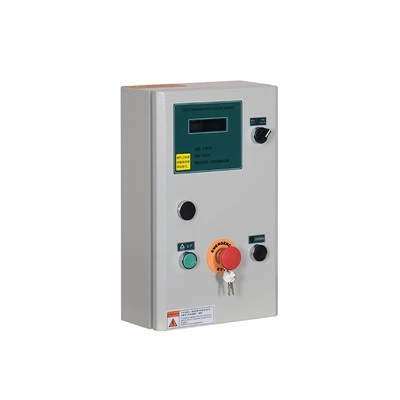
At the end of the day, a stretch wrapper is only as good as its control system. It’s the part that turns raw film and a blank pallet into a stable load that doesn’t break in transit. I’ve seen companies waste thousands, even tens of thousands, of dollars a year because they ignored these common control system issues. Most of them are fixable—you don’t have to replace the whole machine, just upgrade or adjust the control system. If you’re dealing with constant film waste, load collapses, line shutdowns because of control glitches, or that annoying UI that makes your operators want to throw their hands up, we can help. We’ve worked with all kinds of operations, from small warehouses to large manufacturing facilities, and we build control systems tailored to your needs. There’s no one-size-fits-all solution, but if you reach out, we can walk through your setup, point out what’s causing the problems, and figure out a cost-effective fix. Don’t let a finicky control system keep your line from running smoothly—get in touch to chat about how we can optimize your stretch wrapper control system.
Industrial Door Control Box References: 1. Warehouse Distribution and Logistics Association. (2023). "Material Handling Equipment Maintenance Report". 2. Industrial Maintenance and Plant Operations Magazine. (2022). "Control System Glitches in Packaging Lines: Root Causes and Mitigation". 3. Stretch Wrapper Manufacturers Association. (2021). "Best Practices for Stretch Wrapper Control System Calibration".
Wuxi Rstar Electric Co., Ltd.
With abundant experience, we are one of the most professional stretch wrapper control system manufacturers and suppliers in China. Welcome to wholesale bulk customized stretch wrapper control system at competitive price from our factory. If you have any enquiry about quotation, please feel free to email us.
Address: 9th Floor, Building 9, Shengfeng Lianzhi Valley, No.67 Zhujiang Road, Xinwu District, Wuxi City
E-mail: rstarbz@163.com
WebSite: https://www.rstar-wx.com/
