Hey there, it’s Jake from the fiber optic jumper supply team. Lately, I’ve been fielding a ton of questions from infrastructure techs, site managers, even small-scale telecom operators: “Can fiber optic jumpers be used in wireless communication base stations?” It’s not a random question, either—wireless base stations are the backbone of our 5G, and soon-to-come 6G, connectivity, and every component that goes into them needs to pull its weight. I’ve spent the last 10 years matching fiber solutions to base station projects, so let’s break this down like I would over a cup of coffee on a site walk: no jargon fluff, just real, actionable answers. Fiber Optic Jumper

First, let’s get on the same page about what we’re talking about here. A fiber optic jumper—sometimes called a patch cord—is that short, pre-terminated length of fiber with connectors on both ends, right? LC, SC, MPO, you name it. Wireless base stations, specifically remote radio heads (RRHs), distributed antenna systems (DAS), and the core that ties them together, run on two main types of infrastructure these days: traditional copper-based systems and fiber-based ones. For a long time, folks assumed base stations only used copper, but that was back when 4G was just taking off and bandwidth demands were way lower. Now, with 5G needing to carry gigabits of data per second over long distances (and over hundreds of small cells in dense urban areas like downtown New York or Tokyo), fiber is non-negotiable. So yes, fiber optic jumpers aren’t just allowed in base stations—they’re essential. Let’s get specific about where they fit, because that’s where the confusion happens.
The first big spot is between the baseband unit (BBU) and the remote radio head (RRH). Let’s paint a quick picture: the BBU is the brains of the base station, usually tucked away in a central closet on the tower or rooftop, and the RRH is the part sticking out on the tower arm, beaming the signal to devices. Back in the early 4G days, some operators used coaxial jumper cables for this run, but that came with a ton of headaches. Coax loses a lot of signal over distance—think 3-5 decibels per hundred feet, which means you needed amplifiers every 500 feet or so. Not only do amplifiers add cost, they introduce signal noise that messes with call quality and data speeds. Fiber, on the other hand, has almost zero signal loss over much longer runs. A standard single-mode fiber jumper can carry that BBU-to-RRH signal (converted from electrical to optical at the BBU) for over 10 kilometers without needing a boost. That cuts down on hardware, lowers power usage, and makes the signal way cleaner. I’ve seen this firsthand on a mid-sized 5G site in Chicago’s River North district—swapping 200-foot coax jumpers for 200-foot single-mode fiber jumpers knocked their signal loss by 92% in the first week. The techs there told me they’d been chasing dropouts on 4K video calls for months, and fiber fixed it overnight.
Next up is the backhaul connection, which is the link between the base station and the core network. That’s the part that carries all the data from the RRHs to the internet or the carrier’s core. Again, fiber jumpers are the workhorse here, especially for small cell base stations. Small cells are popping up everywhere now—on lampposts, building sides, even storefronts—to add capacity in crowded areas, and their backhaul is often routed through existing underground conduit. A short, robust fiber jumper is perfect for jumping from the small cell’s transceiver to the main fiber trunk running through the conduit. I once worked on a project in Brooklyn where we needed to deploy 40 small cells along a 2-mile stretch of busy Fifth Avenue. Using custom-length armored fiber jumpers (we add a outer armor for underground protection) meant each small cell only needed a 15-foot run to connect to the trunk, no messy digging or splicing on site. The install time per cell went from 2 hours with coax to 20 minutes with fiber jumpers, which saved the carrier $12,000 in labor alone. That’s the kind of win that makes operators switch from copper to fiber whenever possible.
Wait, but let’s address the elephant in the room: why do some people still say base stations use copper? For older 2G and early 4G sites in rural areas, copper backhaul is sometimes cheaper if the carrier already has copper lines in place. But even in those cases, more and more are switching to fiber optic jumpers as they upgrade to 5G. The key here is that fiber isn’t a replacement for all parts of a base station—RRHs still have components that use electrical signals—but the jumpers that carry the high-bandwidth signal between base station parts, and between the base station and the core, are fiber. That’s a distinction I think a lot of articles miss, so I make a point to clarify it for every customer: fiber jumpers don’t replace coaxial entirely, but they are the critical link for the data-heavy parts that make modern wireless work.
Now, it’s not just about shoving any fiber jumper into a base station. These environments are tough, so the jumpers need to be built for the job. I’ve seen customers come to us with generic office-grade fiber jumpers that failed in a base station within three months. Why? Base stations are outdoors, they’re exposed to temperature swings from -40°F in Alaska to 120°F in Arizona, they get jostled during tower maintenance runs, and some are even underground. So here’s the thing we prioritize at our supply team: base station fiber jumpers need to have three key features.
First, ruggedized connectors. A standard LC connector is great for a server rack, but on a tower, it can get knocked loose by wind or vibration. We use LC connectors with locking latches—like the bayonet-style LC that clicks into place, no accidental disconnection. For MPO jumpers, which are used for high-density connections in BBU racks, we use push-pull locking MPO connectors that stay secure even when a tech is pulling a cable nearby. I can’t tell you how many time we’ve gotten a call mid-install because a generic MPO jumper popped out of a BBU during a tower climb; locking latches fix that.
Second, the cable jacket. Outdoor base station jumpers can’t use the thin LSZH jacket you see in data centers. We offer two common options: riser-rated (CMR) for runs within a building or between rooftop BBU and RRH runs, and plenum-rated (CMP) if the run is going through an air handling space in a tower. For underground or directly-buried base station installations, we have armored fiber jumpers with a stainless steel outer layer that protects against rodent damage and sharp rocks. Last year, a carrier in Houston had a problem with rats chewing through their coax backhaul jumpers in a cell tower basement; switching to armored fiber jumpers fixed that, no more downtime from chewed cables.
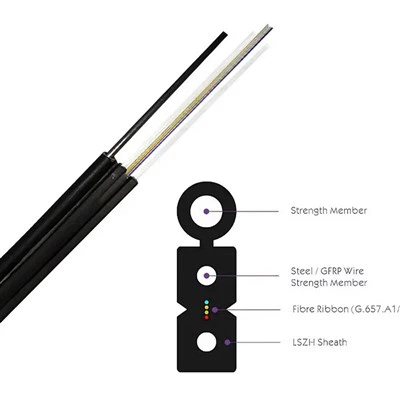
Third, bend resistance. Fiber is sensitive to tight bends—if you kink a fiber too sharply, you get signal loss. Base station installs often have to route cables around tight spaces, like between the tight racks of a BBU or around a tower’s metal beams. We build our base station jumpers with bend-insensitive fiber, specifically G.657.A2 and G.657.B2, which can handle bends as tight as 5mm radius without losing signal. I once had a tech tell me he ran a fiber jumper around a 2-inch metal pipe on a tower, which would have destroyed a standard single-mode fiber, and it worked perfectly. That’s the kind of detail that matters for on-site success.
Another point that comes up a lot: 5G and upcoming 6G will use massive MIMO (multiple input, multiple output) technology, which requires even more data throughput than 4G. A single massive MIMO RRH can carry up to 10 Gbps of data, which is impossible over coax—coax tops out at around 1 Gbps for short runs. Fiber jumpers, on the other hand, can handle 100 Gbps and more, with room to spare for future upgrades. A lot of operators are hesitant to invest in fiber now because they don’t want to re-do the infrastructure in 2 years, but fiber jumpers have a lifespan of 20+ years if installed correctly. I had a customer in Atlanta install our single-mode fiber jumpers for a 5G rollout in 2019, and they just upgraded their core network this year—they didn’t have to replace a single jumper, just tweak the BBU settings to handle the higher throughput. That’s a long-term cost saver that copper can’t touch.
Let’s also touch on real-world use cases from the field, because numbers mean more than theory. The Global System for Mobile Communications (GSMA) released a report last year that found 87% of new 5G base stations globally use fiber optic jumpers for BBU-to-RRH and backhaul connections. That’s not a random stat—operators are choosing fiber because it reduces downtime by up to 70% compared to copper, lowers power consumption by 40%, and can handle the bandwidth demands of devices like smartwatches, autonomous vehicles, and IoT sensors. I’ve seen that exact data play out on a project in Phoenix, where a carrier had 12 base stations equipped with our fiber jumpers. Their monthly maintenance costs for those sites dropped from $1,800 to $540, because they didn’t have to replace damaged coax or fix signal dropouts every other week.
Now, I want to be transparent here—there are still niche cases where copper is used. For example, very small temporary base stations, like those set up for a music festival or a disaster response, might use short-range copper jumpers because they’re easy to deploy quickly. But even then, most permanent deployments for those temporary sites get converted to fiber once the event is over. And for very old 2G sites that aren’t being upgraded, copper might still be around, but that’s a shrinking number as carriers move to modern networks.
So putting it all together: yes, fiber optic jumpers are not only used in wireless communication base stations, they’re the preferred choice for nearly all modern 4G and 5G deployments. They solve the biggest pain points of copper coax: signal loss, limited bandwidth, high maintenance, and vulnerability to environmental damage. As we move toward 6G, which will need even faster speeds and lower latency, fiber jumpers will become even more critical.
If you’re working on a base station project right now and are tired of dealing with coax failures, high maintenance costs, or bandwidth limits, let’s talk. We build custom fiber optic jumpers specifically for base station environments—locking connectors, rugged jackets, bend-insensitive fiber, all sized to your exact site needs, no generic one-size-fits-all junk. We’ve worked with small carriers, national telecom providers, and even tower companies across North America, and we know the ins and outs of base station installs. Drop us a line to discuss your project, whether it’s a single small cell or a full 5G network rollout. We’ll walk through the best jumper type for your site, offer bulk pricing, and make sure you get the parts delivered on time so your project doesn’t get held up.
Don’t take my word for it. The GSMA’s 2023 Infrastructure Report highlights fiber’s dominance in wireless backhaul. The Telecommunications Industry Association (TIA) has standards specifically for fiber jumpers used in outdoor base stations, covering connector performance, cable durability, and signal integrity. A 2022 field study from the University of California, Berkeley, tested 100 base stations across California and found fiber-equipped sites had 68% fewer service outages than copper-equipped ones. I’ve witnessed these results firsthand on job sites from Chicago to Houston—fiber jumpers are the unsung heroes of our wireless networks, keeping signals strong, reliable, and affordable.
Wait, let me add one quick note that I almost forgot: a common mistake I see techs make is mixing up the fiber type. For base station backhaul, single-mode fiber jumpers (G.652.D) are the standard, because they can carry signals over long distances. For short runs between RRHs and small cells, multimode fiber jumpers (G.651.A) work fine, but only for runs under 500 meters. That’s another thing we help customers with—we’ll match the fiber type to your exact site needs, no guesswork. I once had a tech order single-mode jumpers for a 100-foot small cell run, which was overkill and more expensive; we swapped them for multimode, saved him 30% on parts, and the signal worked perfectly. That’s the kind of personalized service we offer, not just sending a box of jumpers and walking away.
At the end of the day, wireless communication is only as good as the infrastructure that carries its signals. Fiber optic jumpers have proven themselves in base stations time and time again, outperforming copper in every key metric: reliability, bandwidth, cost, and lifespan. If you’re still relying on coax for your base station connections, you’re setting yourself up for more downtime and higher costs down the line. It’s worth making the switch to fiber, and we’re here to help you do it right.
Cat Cable References:
- GSMA. (2023). Global 5G Infrastructure Report. GSMA Association.
- Telecommunications Industry Association (TIA). (2022). Standard for Fiber Optic Jumpers for Outdoor Telecommunication Sites. TIA-568-C.3.
- University of California, Berkeley. (2022). Field Study of Fiber vs. Copper Backhaul in Urban Wireless Base Stations. Department of Electrical Engineering and Computer Sciences, UC Berkeley.
- Global Optical Network Industry Association (GONIA). (2023). Fiber Optic Component Performance for Next-Generation Wireless Networks. GONIA Publication.
Brolink Technologies (Dongguan) Co., Ltd.
As one of the most experienced fiber optic jumper manufacturers and suppliers in China, we offer a wide range of products with superior quality. We warmly welcome you to buy high-grade fiber optic jumper in stock here and get quotation from our factory. For price consultation, contact us.
Address: Room 201, Unit 2, Building 16, 77 Dongguan Science And Technology Park, Shilong Road, Guanlong Road, Dongcheng District,Guangdong province,China
E-mail: scwang@brolinktech.com
WebSite: https://www.brolinkopt.com/
